How to Prepare Your Sales Team for a Trade Show
· 11 min read
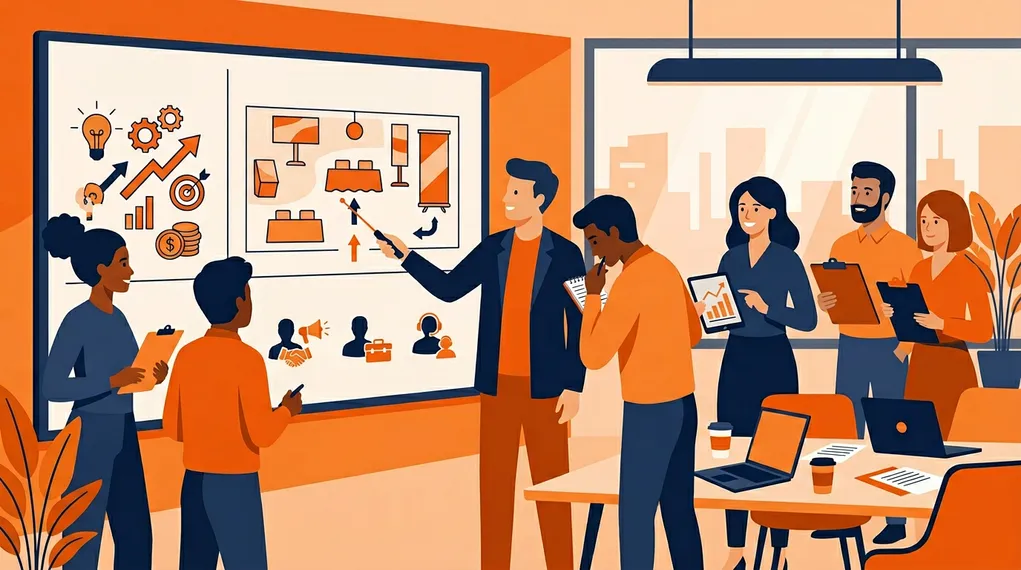
Most sales teams show up to a trade show and wing it. They know the product. They’re comfortable talking to prospects. They assume that’s enough.
It’s not. The difference between an unprepared team and a well-prepared one isn’t effort — it’s structure. A prepared team knows who to target, how to qualify, what to capture, and how to follow up. An unprepared team has good conversations and then loses the leads.
3–5×
more qualified leads captured by prepared teams vs. unprepared teams
CEIR Exhibition Effectiveness Study
Trade show preparation isn’t about memorizing scripts or building elaborate playbooks. It’s about aligning the team on seven specific areas so that every conversation translates into pipeline — not just a pleasant memory.
The Seven Areas of Trade Show Team Preparation
1. Target account research
Get the attendee list from the event organizer (usually available 2–4 weeks before). Cross-reference against your ICP. Identify 20–50 priority accounts. Research their current tech stack, recent news, and likely pain points. Assign priority targets to specific reps. Reach out before the show to book booth meetings. Pre-booked meetings convert at 3–5× the rate of cold booth conversations.
2. Pitch framework (not a script)
Scripts sound robotic and break down when the prospect asks an unexpected question. Frameworks adapt. Build a 60-second pitch structure: Hook (the problem you solve) → Discovery (one qualifying question) → Value (how you solve it differently) → Next step (what happens after the conversation). Every rep should be able to deliver this naturally — not word-for-word, but structurally consistent.
3. Lead qualification criteria
Define hot, warm, and cold before the event — not after. Hot: has budget, has timeline, matches ICP, expressed interest in a demo. Warm: matches ICP, interested but no timeline. Cold: visited booth, exchanged cards, no clear fit. The team should agree on these definitions so qualification is consistent across all reps. Qualification happens during the conversation — not three days later when nobody remembers the details.
4. Technology setup
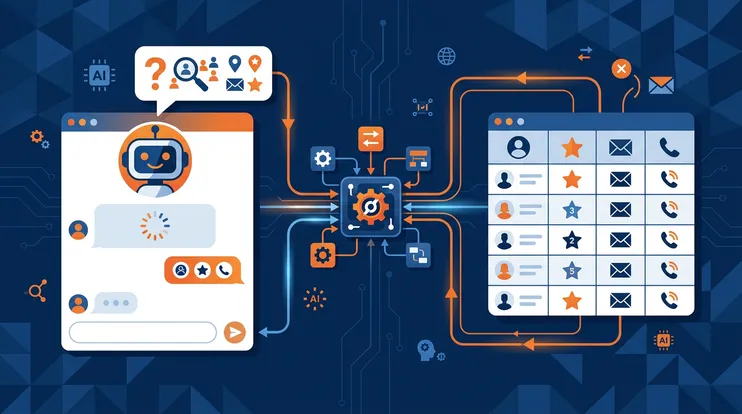
Every rep's device should be configured and tested before the event. Lead capture app installed, CRM integration verified, event-specific instructions configured, offline mode tested. Run one end-to-end rehearsal: scan a test badge, record a voice note, trigger the AI draft, review, send, verify CRM sync. The rep who fumbles with the app at the booth is the rep who didn't practice. Budget 30 minutes per person for setup and testing.
5. Role assignments
Not everyone at the booth should do the same thing. Assign roles based on strengths. Greeter: manages booth flow, qualifies incoming traffic in 30 seconds, routes to the right person. Qualifier: has the deeper product conversation, identifies pain points and timeline. Demo specialist: runs live product demos for hot prospects. Lead capture: ensures every conversation is captured with context (some teams have a dedicated capture person; others make it everyone's job). Rotate roles every 2–3 hours to prevent fatigue.
6. Follow-up cadence plan
Define the cadence before the event. First touch: personalized email within minutes (ideally at the booth). Second touch: 48 hours later if no response (reference the first email). Third touch: one week later (add new value — a case study, a relevant blog post, a specific offer). LinkedIn connection: within 24 hours of the conversation. The cadence should be agreed upon in advance so reps don't have to make decisions in the moment.
7. Daily debrief process
10 minutes at the end of each day. Four questions: (1) How many leads captured today vs. target? (2) What patterns are we seeing — what questions keep coming up? (3) Who needs support or role rotation? (4) Any hot leads that need immediate action (dinner meeting, private demo)? The debrief is also where the team adjusts qualifying criteria or pitch focus based on what's actually resonating with this audience.
Why Preparation Matters More Than Booth Design
The trade show industry is obsessed with booth design — and for good reason. A great booth attracts foot traffic. But foot traffic without a prepared team is just a crowd. The booth gets them to stop. The team determines whether that stop becomes a qualified lead.
"The best booth in the world can't compensate for an unprepared team. But a prepared team can outperform the biggest booth on the floor."
— Event Marketing Institute, Annual Benchmarking Study
The numbers support this. Teams that invest in preparation (defined as: formal pre-event briefing, documented qualifying criteria, technology rehearsal, and defined follow-up cadence) consistently outperform teams that invest only in booth aesthetics. The lift isn’t subtle — it’s a multiple.
This doesn’t mean booth design is irrelevant. It means that preparation is higher-leverage. A $10,000 booth with a prepared team will outperform a $50,000 booth with a team that wings it.
Area 1: Target Account Research
The attendee list is the most underused asset in trade show preparation. Most organizers make it available 2–4 weeks before the event. Cross-reference it against your ICP and you have a prioritized target list.
For each priority account, research:
- What do they do? (Industry, size, stage)
- What tech stack are they likely using? (Competitors, adjacent tools)
- Any recent news? (Funding, leadership changes, expansion)
- Who specifically is attending? (Title, seniority, decision-making authority)
Then reach out before the event: “We’ll be at booth 412. I noticed your team is expanding into [area] — we’ve helped similar companies with [specific problem]. Could we book 15 minutes at the show?”
Pre-booked meetings aren’t just higher-converting. They change the dynamic of the conversation. Instead of cold qualifying, you’re continuing a thread. The prospect arrives expecting value, not a pitch.
Area 2: The Pitch Framework
The difference between a script and a framework is flexibility. A script breaks when the prospect says something unexpected. A framework bends.
The structure: Problem → Discovery → Value → Next Step
- Problem (15 seconds): Name the specific pain your audience has. “Most sales teams come back from events with a spreadsheet of names and no context. They spend a week writing follow-ups, and by then the leads have gone cold.”
- Discovery (30 seconds): Ask one qualifying question. “How does your team currently handle follow-up after an event?”
- Value (15 seconds): Explain how you solve it differently. “We let your reps follow up with a personalized email in under two minutes — while still at the booth. The email references what was actually discussed, not a template.”
- Next Step: “Want to see how it works? I can walk you through it in 90 seconds.”
Train the framework through role-play, not by reading slides. Pair reps up and have them practice with realistic objections.
Area 3: Lead Qualification Criteria
Qualification consistency is what separates a useful lead list from a useless one. When five reps use five different definitions of “hot,” the post-event pipeline review is chaos.
Define the criteria in advance and write them down:
Hot: Matches ICP + expressed a specific pain point + has a timeline or budget + wants a demo or trial Warm: Matches ICP + interested but no urgency or timeline + engaged in the conversation Cold: Visited booth + exchanged cards + no clear fit or interest
These definitions should be discussed as a team, not handed down by management. The reps on the floor have the best intuition about what “hot” means for this specific event and audience. For a structured approach to trade show lead scoring — including manual and AI-powered frameworks — see our dedicated guide. For how qualification criteria feed into the full event lead capture pipeline, see our comprehensive guide.
Area 4: Technology Setup
Technology failures at a trade show are expensive because they happen at the worst possible time — when a hot prospect is standing in front of you.
The tech preparation checklist:
- Install and update the lead capture app on every device
- Test badge scanning with real badges (or printed test cards)
- Test voice recording in a noisy environment (play crowd noise from YouTube)
- Verify CRM integration — scan a test lead and confirm it appears in your CRM with all fields
- Test offline mode — airplane mode, full workflow, verify queued sync
- Configure event instructions — set up event-specific AI follow-up instructions
- Set up customer profiles — configure profiles for the verticals you’ll meet
- Charge devices and bring backup power banks
Budget 30 minutes per rep for setup and a complete end-to-end test. The investment pays for itself the first time a rep avoids fumbling with the app in front of a prospect.
For a full trade show preparation checklist including logistics and strategy, see our timeline-based guide.
Area 5: Role Assignments
The best booth teams don’t operate as interchangeable parts. They operate as a system.
Greeter: The first person a prospect sees. Their job is booth flow management — a quick smile, a qualifying question (“What brings you to the show?”), and a routing decision: hand off to a qualifier, invite to a demo, or politely release a non-ICP visitor. This role is high-energy and suits your most extroverted team member.
Qualifier: Has the substantive conversation. Uses the pitch framework. Identifies pain points, timeline, and next steps. Captures the lead.
Demo specialist: Runs live product demos for hot prospects. Should know the product deeply and be able to adapt the demo to the prospect’s specific use case. Not every conversation needs a demo — but hot leads should get one.
Lead capture: Some teams designate one person to handle all scans, voice notes, and follow-up triggers while the qualifier continues conversations. This tag-team approach keeps throughput high during busy periods.
Rotate roles every 2–3 hours. The greeter role is exhausting. The lead capture role can feel repetitive. Fresh energy produces better conversations.
Area 6: Follow-Up Cadence Plan
Agreeing on the cadence before the event means reps don’t have to think about it during or after. The plan runs automatically.
Touch 1 (at the booth, within minutes): Personalized email referencing the conversation. AI-drafted from voice context. Sent from the rep’s business email. The research on speed to lead shows this first touch generates dramatically higher response rates when it lands within minutes.
Touch 2 (48 hours): Short follow-up if no response. Reference the first email. Add a specific question or next step.
Touch 3 (1 week): Final touch. Add new value — a relevant case study, a blog post about their challenge, or a specific offer.
LinkedIn (within 24 hours): Connect with a personalized note referencing the conversation.
The cadence should adjust based on lead temperature. Hot leads get touch 1 + an immediate demo booking. Warm leads get the full three-touch sequence. Cold leads get touch 1 only.
With the right lead capture and follow-up tools, touch 1 happens automatically at the booth. That eliminates the biggest drop-off point in the entire pipeline.
Area 7: Daily Debrief Process
The debrief is the highest-ROI 10 minutes of the event day. It turns individual observations into team intelligence.
Format: Standing meeting, end of each day, 10 minutes max.
Agenda:
- Numbers: Leads captured today vs. target. Same-day follow-up rate.
- Patterns: What questions are prospects asking repeatedly? What objections are coming up? Should we adjust the pitch or qualifying criteria?
- Team: Who’s tired? Who needs a different role tomorrow? Any conflicts or coverage gaps?
- Hot leads: Any prospects who need immediate attention — a dinner, a private demo, a follow-up call that can’t wait?
Document the debrief in a shared note. After the event, these daily debriefs become the raw material for your event retrospective and your preparation for the next show.
The Pre-Event Rehearsal
Everything above comes together in a single pre-event rehearsal. Thirty minutes. The full team.
Walk through the scenario: a prospect approaches the booth. The greeter qualifies them. The qualifier runs the pitch framework. The lead capture person scans the badge and records a voice note. The AI draft is triggered. The follow-up is reviewed and sent. The lead appears in the CRM.
Do this once, end to end, with the actual tools. Identify friction points. Fix them before you’re on the show floor.
The teams that rehearse capture 3–5× more qualified leads than the teams that don’t. Not because rehearsal teaches them something they didn’t know — but because it turns knowledge into muscle memory, and muscle memory into results. For a broader view of how AI fits into the event workflow — from OCR scanning to lead scoring — see our practical guide to AI at trade shows.
Equip your team with the lead capture workflow that works at the booth. Try NeverDrop free.
Get Started Free