ICP Scoring After Every Conversation: How AI Lead Reports Work
· 10 min read
After a busy trade show day, your team has 40 new leads. Some are perfect ICP fits with urgent pain points and budget authority. Others are students collecting brochures. The problem: at 6 PM, standing in a crowded convention hall, every lead looks the same in your spreadsheet — a name, a company, and maybe some hastily typed notes.
The qualification gap isn’t about effort. Your salespeople had great conversations and picked up on the signals. But those signals live in their heads, not in your CRM. By the time the team debrief happens the next morning, the nuance has faded, the details blur, and prioritization defaults to “most recent” or “biggest company name.”
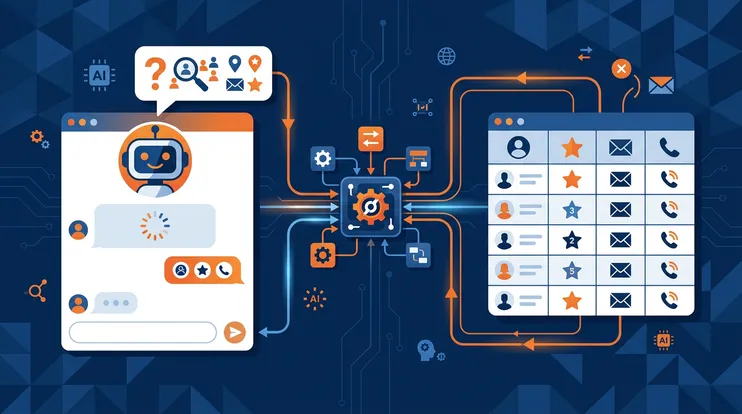
AI lead reports change this by turning every conversation into a structured, scored analysis — automatically, minutes after the meeting ends.
68%
of B2B sales teams say lead qualification is their biggest challenge at events
Demand Gen Report
What Is ICP Scoring at Events?
ICP (Ideal Customer Profile) scoring is the process of evaluating how well a prospect matches your target buyer persona. In a traditional sales context, this happens in the CRM through lead scoring models that assign points based on firmographic data — company size, industry, revenue range, technology stack.
At events, ICP scoring is different. You have something CRM lead scoring doesn’t: the actual conversation. The prospect told you their pain points, their timeline, their budget constraints, their decision-making process. This qualitative data is worth more than any firmographic database — but only if it gets captured and analyzed before it fades from memory.
AI-powered lead reports bridge this gap. They take the raw conversation transcript — every word spoken during the meeting — and produce a structured analysis that scores the lead across multiple dimensions, extracts key signals, and generates specific action items.
This isn’t a simple “hot/warm/cold” tag — although basic lead scoring is where many teams start. It’s a multi-dimensional assessment that gives sales managers the data they need to prioritize pipeline, allocate resources, and coach their team.
The 8 Dimensions of a Lead Report
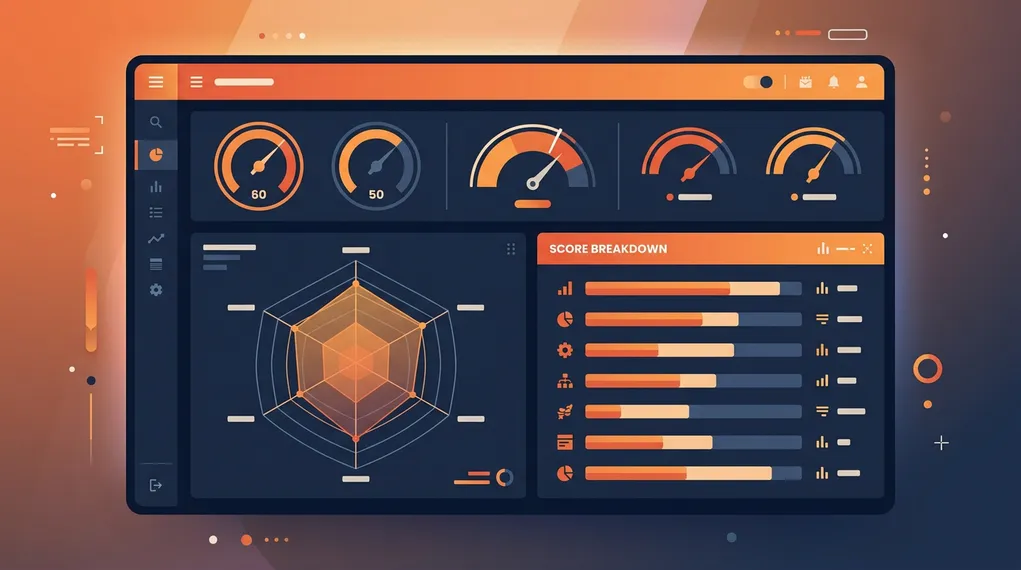
NeverDrop’s AI lead report analyzes every conversation across eight distinct tabs, each designed to surface a different type of insight:
Timing
Conversation duration, speaking time per participant, talk-to-listen ratio. Reveals engagement level — a 20-minute deep dive signals higher interest than a 3-minute badge exchange. Speaker identification tracks who drove the conversation.
ICP Score
Weighted scoring across key criteria: pain urgency, product-market fit, decision-maker authority, budget availability, and timeline. Produces a composite score that enables stack-ranking leads by actual qualification, not gut feel.
Performance
How well the salesperson handled the conversation — objection handling, value proposition articulation, discovery question quality, next-step commitment. This is the coaching dimension that sales managers care about most.
Signal
Buying signals extracted from the conversation: specific pain points mentioned, competitor references, timeline indicators, budget discussions, urgency language. These are the quotes and moments that predict conversion.
Features
Which product features or capabilities the prospect asked about, expressed interest in, or had concerns about. Maps directly to the demo script and proposal customization.
Tips
AI-generated recommendations for the next interaction: what to emphasize, what to avoid, which objection to preemptively address, what content to share. Personalized coaching based on this specific conversation.
Meeting
Summary of what was discussed, agreements made, and commitments from both sides. The executive brief a sales manager can read in 30 seconds to understand the opportunity.
Action
Concrete next steps with suggested timelines: schedule demo, send case study, loop in technical contact, prepare proposal. Each action item is derived from the conversation, not from a generic playbook.
Together, these eight dimensions transform a raw conversation into actionable intelligence. The salesperson gets a follow-up playbook. The manager gets qualification data. The team gets a shared understanding of the opportunity.
How the Scoring Works
The ICP scoring model isn’t a simple checklist. It uses weighted criteria that reflect how real purchasing decisions happen in B2B sales.
Pain urgency (high weight). Did the prospect describe an active problem they’re trying to solve? Is there a triggering event (contract expiration, regulatory change, growth bottleneck)? Urgent pain predicts faster sales cycles and higher close rates.
Product-market fit (high weight). Does the prospect’s use case align with what your product actually solves? The AI evaluates this by comparing the stated needs against your company description and customer profiles. A perfect PMF match means shorter sales cycles and higher retention.
Decision-maker authority (medium weight). Is the person you spoke with a decision-maker, an influencer, or an information gatherer? The AI infers this from title, from how they discuss budget and timelines, and from whether they reference needing approval from others.
Warmth and engagement (medium weight). How engaged was the prospect during the conversation? Talk time, question quality, and forward-looking language (“when we implement…” vs “if we ever need…”) are strong indicators.
Budget indicators (lower weight but important). Did the prospect discuss budget availability, procurement processes, or spending timelines? Even indirect budget references are valuable signals.
The composite ICP score enables something that’s historically been impossible at events: objective, data-driven lead prioritization based on the actual conversation, not on the salesperson’s subjective impression or the prospect’s job title.
Why Managers Need This
For individual sales reps, the lead report is a helpful reference. For sales managers, it’s transformative.
Prioritization across the team. When a team of five captures 200 leads at an event, the manager needs to know which 20 to prioritize for immediate follow-up. ICP scores across all leads, from all reps, create a unified ranking that transcends individual bias.
Coaching with evidence. The Performance tab shows exactly how each rep handled their conversations. Instead of generic coaching (“ask more discovery questions”), managers can reference specific conversations: “In your meeting with Acme Corp, you jumped to the demo before understanding their current vendor pain. Let’s talk about how to extend the discovery phase.” For more on how AI captures the field coaching data that managers need, see meeting notes for field sales.
Pipeline forecasting. ICP scores combined with deal signals give managers a realistic view of the pipeline created at the event — not the optimistic “everyone was interested” report, but a data-grounded forecast of which opportunities will actually progress.
Pattern recognition. Across many reports, managers spot which types of conversations convert best, which event formats produce the highest-quality leads, and which messaging resonates most strongly. This feeds back into event strategy, booth design, and team training.
For a deeper analysis of how conversation intelligence changes field sales, including the coaching workflow that lead reports enable, see our dedicated guide.
The Manual Alternative (and Why It Fails)
Without AI lead reports, the qualification process at events looks like this:
- Salesperson has the conversation
- Salesperson mentally notes key signals during or after the meeting
- Salesperson types abbreviated notes into a CRM or spreadsheet (“Good lead, interested in integration, follow up next week”)
- Manager reads notes the next day and tries to extract prioritization signals
- Team debrief happens 1–3 days later, by which point memory has faded
The problems are obvious: subjective assessment, inconsistent note-taking quality across the team, loss of detail over time, and no structured framework for comparison. Two reps can have identical conversations and rate the lead completely differently based on personal optimism or recent experience.
AI lead reports eliminate subjectivity by applying the same analytical framework to every conversation, generating the analysis in minutes rather than days, and preserving the full conversational context that human memory inevitably discards.
From Score to Action
A score without action is just a number. What makes lead reports valuable is the direct connection between the analysis and the follow-up:
High ICP score + strong signals → immediate personalized follow-up. The Action tab provides the specific next steps. The AI-generated draft references the exact pain points and features discussed. The email goes out within minutes.
Moderate ICP score + unclear signals → targeted discovery. The Tips tab suggests what to clarify in the next interaction. The follow-up email asks the right questions to advance the qualification.
Low ICP score + weak signals → nurture or deprioritize. Not every lead deserves the same effort. Objective scoring gives teams permission to deprioritize poor fits without guilt — and redirect that energy to the opportunities that matter.
This is fundamentally different from the traditional approach of treating all event leads equally and hoping the pipeline sorts itself out over time. Structured scoring means your best opportunities get attention first, while the event context is still fresh. For the full workflow — from initial capture through scoring and follow-up — see the complete guide to event lead capture.
How It Compares to Traditional Lead Scoring
Traditional CRM lead scoring (Salesforce, HubSpot) works well for inbound leads where you have behavioral data — website visits, email opens, content downloads. At events, this data doesn’t exist. You have a name, a company, and a conversation.
AI lead reports fill the gap that traditional scoring models can’t: they score the quality of the actual interaction, not just the demographic fit. A CEO of a Fortune 500 company who spent 2 minutes collecting a brochure scores lower than a Director at a mid-market company who spent 15 minutes describing their pain points and asking about implementation timelines. Traditional lead scoring would rank them in the opposite order.
For teams using NeverDrop alongside CRM integrations, the ICP score from the lead report enriches the CRM record — giving the inside sales team context they’d never have from a badge scan alone.
Getting Started with Lead Reports
Lead reports work best when they have rich input data. Here’s what maximizes report quality:
Record the conversation. The transcript is the primary input. Real-time transcription with speaker identification produces the richest analysis. Voice notes captured immediately after the meeting are the next best option.
Set up your customer profiles. The ICP scoring model uses your company description and customer profiles to evaluate product-market fit. Teams that configure these before the event get more accurate and relevant scores.
Use the report for team debriefs. Instead of asking “how did it go?” after each conversation, pull up the lead report. It structures the debrief around data, not recollection.
Lead reports are available for any lead with a recorded conversation — one tap to generate, two credits per report, results delivered in under a minute. Teams using NeverDrop’s MCP integration can also query lead reports and ICP scores from Claude, Notion, or any AI assistant. For full details on the report structure and how to interpret each tab, visit the lead report feature page.
Frequently Asked Questions
ICP (Ideal Customer Profile) scoring measures how closely a prospect matches your best-fit customer criteria. AI-powered ICP scoring analyzes conversation transcripts to assess fit across multiple dimensions — decision-maker level, timeline, budget signals, pain alignment, and engagement quality.
AI analyzes the conversation transcript, contact data, and company information to generate scores across 8 dimensions: timing, ICP fit, sales performance, buying signals, feature interest, actionable tips, meeting readiness, and recommended next steps. Each dimension gets a score and explanation.
A conversation transcript is the primary input — the richer the conversation, the better the scoring. Contact data (name, company, title) and company profile provide context. The scoring works best when you've recorded a 2-5 minute conversation with the prospect.
Turn every conversation into a scored, actionable lead report. Try NeverDrop's AI lead reports.
Get Started Free