Conversation Intelligence for Field Sales: What Gong and Modjo Miss
· 11 min read
Conversation intelligence is one of the fastest-growing categories in B2B sales technology. Gong, Chorus (now ZoomInfo), Modjo, and a growing list of competitors have built a market worth over $2 billion by recording, transcribing, and analyzing sales calls.
There’s one problem: they only work on video calls.
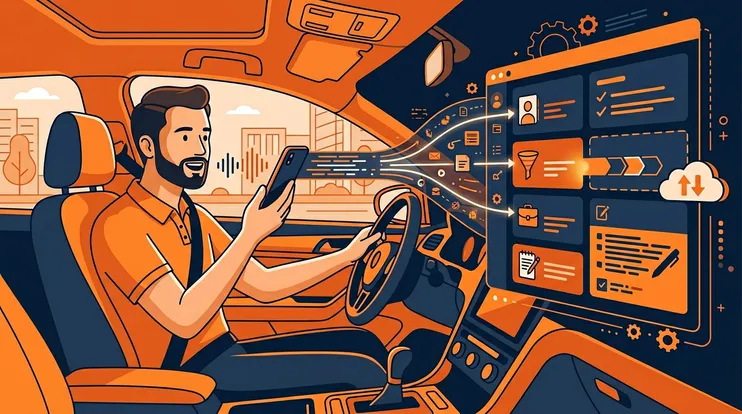
Every major conversation intelligence platform assumes the sales interaction happens on Zoom, Teams, Google Meet, or a phone dialer. The software joins the meeting, records the audio, transcribes the conversation, and runs analytics. It’s a powerful workflow — for inside sales teams who live on video.
But what about the sales conversations that don’t happen on a screen?
60%
of B2B revenue in field-heavy industries originates from in-person interactions
McKinsey — The Future of B2B Sales
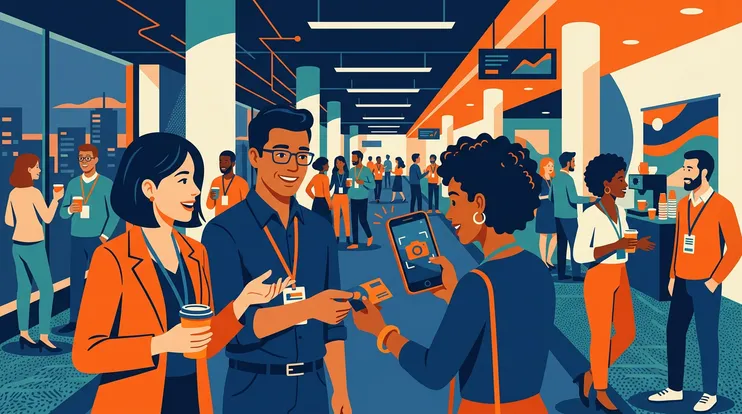
Trade shows. Client visits. Factory tours. Networking dinners. On-site demos. These interactions generate the majority of revenue in industries like manufacturing, pharma, medical devices, professional services, and industrial technology. And they are completely invisible to every conversation intelligence platform on the market.
This article examines the blind spot in conversation intelligence, why it exists, and what the field-first alternative looks like.
The Online Assumption
The conversation intelligence category was born in the era of inside sales transformation. As B2B sales moved from in-person meetings and phone calls to Zoom calls, a new class of tools emerged to capture what was being said. The value proposition was immediate: managers could coach without sitting in on every call, reps could review their own conversations, and revenue teams could spot patterns across thousands of interactions.
The technology works beautifully for its intended context. The problem is that it was never designed for the other context — and the market has spent so long focused on virtual calls that it forgot the other context exists.
Why the Field Was Ignored
The reason is technical, not strategic. Recording a Zoom call is architecturally simple: the platform joins the meeting as a silent participant and captures the audio stream. The audio is clean, the speakers are identified by the meeting software, and the connection is stable.
Recording an in-person conversation is architecturally hard. The audio comes from a phone microphone in a noisy room. There’s no meeting invite to join. Speaker separation requires on-device processing. The internet connection at an event venue may be unreliable or nonexistent.
These challenges meant that conversation intelligence for the field required fundamentally different technology — not a feature extension of existing virtual platforms. No existing player had the incentive to rebuild their stack from scratch for a different use case. So the field stayed dark.
What Field Sales Teams Are Missing
The consequences of this blind spot are concrete and measurable.
No Conversation Records
When a rep has a 20-minute booth conversation with a prospect at a trade show, nothing is captured. No transcript, no recording, no summary. The only record is whatever the rep types into a CRM note after the event — if they type anything at all.
For comparison, that same rep’s 20-minute Zoom call would be fully transcribed, analyzed for sentiment, tagged with keywords, and available for manager review. The in-person conversation — likely higher-stakes, with a more qualified prospect — gets nothing.
No Coaching Data
Inside sales managers can review call recordings, identify coaching opportunities, and track improvement over time. Field sales managers have no equivalent. They can’t hear what their reps said at the booth. They can’t review the pitch. They don’t know if the rep asked the right discovery questions or spent 15 minutes talking about features nobody cares about.
This creates a two-tier coaching system: inside reps get data-driven feedback, field reps get anecdotes and assumptions. Our guide on AI meeting notes for field sales explores how to close this coaching gap.
No Follow-Up Automation
Conversation intelligence platforms analyze calls after the fact — but they don’t draft follow-up emails. The rep still writes every follow-up manually. For inside sales, this is manageable: you handle 4-6 calls per day and have time between meetings.
For field sales, it’s catastrophic. A rep at a trade show talks to 20-40 people per day. By the evening, they can barely remember who said what. Writing personalized follow-ups for all of them is physically impossible. This is the root cause of the 80% lead death rate at trade shows.
No ICP Scoring From Real Conversations
Modern conversation intelligence platforms can identify deal risk, competitor mentions, and buying signals in virtual calls. None of this analysis exists for field conversations. A rep might have a 30-minute meeting with a perfect ICP fit — and the only evidence is a gut feeling written in a CRM note.
Online-Only vs Field Conversation Intelligence
| Capability | Online CI (Gong, Modjo) | Field CI (NeverDrop) |
|---|---|---|
| Virtual call recording (Zoom/Teams) | ✓ | ✗ |
| In-person conversation transcription | ✗ | ✓ |
| Badge / business card scanning | ✗ | ✓ |
| Offline mode | ✗ (requires internet) | ✓ (full offline pipeline) |
| Speaker identification | ✓ (from meeting software) | ✓ (from audio diarization) |
| AI-generated follow-up emails | ✗ | ✓ |
| ICP scoring reports | ✗ (deal analytics only) | ✓ (per-conversation analysis) |
| Conversation coaching data | ✓ (call review tools) | ✓ (transcript + report analysis) |
| CRM sync (HubSpot) | ✓ | ✓ |
| Deal intelligence / pipeline analytics | ✓ | ✗ |
| Event support (trade shows) | ✗ | ✓ |
| EU data hosting | ✗ (most US-hosted) | ✓ |
| Pay-per-use pricing | ✗ (annual per-seat) | ✓ |
The two categories are complementary, not competitive. Online CI owns the video call. Field CI owns the handshake. The problem is that one category exists and the other is just emerging.
How NeverDrop Brings Conversation Intelligence to the Field
NeverDrop wasn’t built as a virtual call recorder adapted for the field. It was built from scratch for in-person conversations. The architecture is fundamentally different.
Real-Time Transcription in Noisy Environments
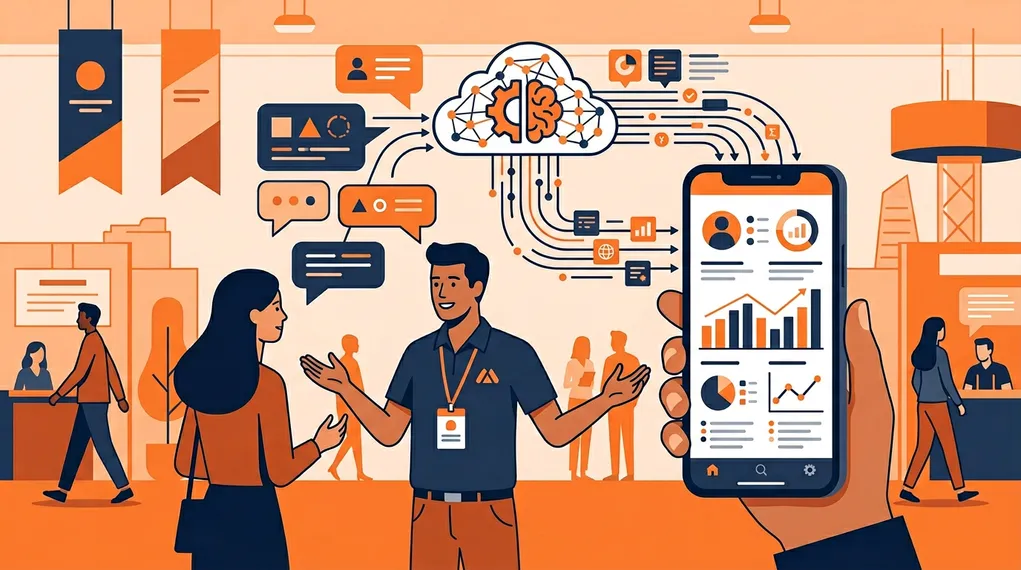
NeverDrop’s transcription engine runs during the conversation — not after. Using advanced speech-to-text with speaker diarization, it produces a live transcript with speaker separation while the rep is still at the booth. The transcript updates in real time on the phone screen.
This matters because field environments are noisy. Trade show floors, restaurants, factory tours — the audio is never as clean as a Zoom call. The transcription model is optimized for exactly these conditions: background noise, overlapping speech, varying distances from the microphone.
Speaker Identification Without a Meeting Invite
On a Zoom call, speaker identification is trivial — the platform knows who’s talking because each participant has an account. In the field, the app has to separate speakers from raw audio. NeverDrop uses AI-powered speaker diarization to identify different voices, and the rep can tag which speaker is them with a single tap (“That’s me”). This creates a structured transcript where each speaker’s contributions are clearly separated.
ICP Scoring From Live Conversations
NeverDrop generates an ICP analysis report after each conversation. The report uses the conversation transcript, company data, and industry context to score the prospect’s fit against your ideal customer profile. It covers:
- ICP score with weighted dimensions
- Buying signals detected in the conversation
- Competitive mentions and positioning
- Next-step recommendations based on conversation analysis
- Performance coaching data from the interaction
This is the field equivalent of what Gong provides for virtual calls — but applied to the conversations that traditional CI platforms can’t see.
AI Follow-Up From Conversation Context
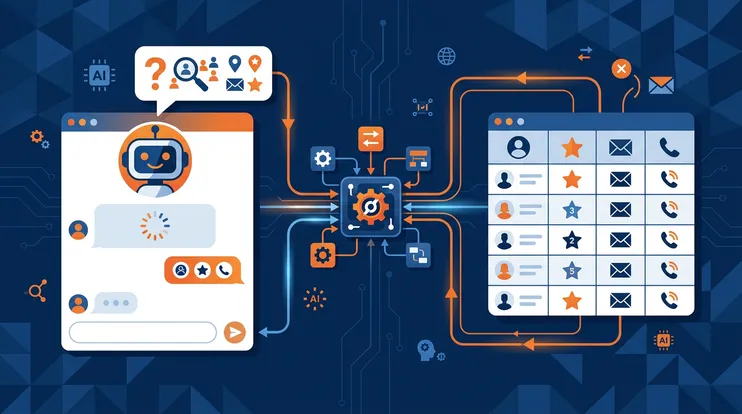
Unlike online CI platforms that analyze calls but don’t write follow-ups, NeverDrop generates personalized follow-up emails based on what was actually discussed. The AI reads the conversation transcript, the rep’s instructions, the customer profile, and the contact’s data — then produces a draft that references specific topics from the exchange.
For a field rep who talked to 30 people at a trade show, this is the difference between sending 30 personalized emails by midnight and sending zero. For teams that prefer quick post-meeting summaries over full recordings, voice notes offer a lightweight alternative that feeds the same AI pipeline.
Offline-First Architecture
Online CI platforms require a stable internet connection — they’re joining cloud-based video meetings. NeverDrop’s field sales features work entirely offline. Scanning, transcription, notes, and even AI follow-up queuing happen locally on the device. Everything syncs when connectivity returns.
At a convention center with 10,000 attendees saturating the WiFi, or during a client visit in a rural factory, the app doesn’t skip a beat. This isn’t a degraded mode — it’s the designed operating condition.
The $2 Billion Blind Spot
The conversation intelligence market has grown to over $2 billion by serving inside sales teams. That’s real value for teams that sell over video. But the market’s exclusive focus on virtual calls has created a structural blind spot: the majority of B2B revenue in field-heavy industries is generated by conversations that no CI platform captures.
$2B+
conversation intelligence market — built entirely for virtual calls
Grand View Research — Conversation Intelligence Market Report
Consider what this means in practice. A medical device company sends 50 sales reps to MEDICA, the world’s largest medical trade show. Over three days, those reps have 500+ conversations with procurement managers, clinical directors, and hospital administrators. These are high-value, face-to-face interactions with decision-makers.
Not a single one of those conversations is captured, transcribed, analyzed, or followed up on with AI assistance. The reps return to the office with business cards and fading memories. The follow-up emails are generic. The CRM notes are sparse. The coaching opportunities are invisible.
Meanwhile, the same company’s inside sales team — handling lower-value, earlier-stage leads over Zoom — has full transcripts, analytics, coaching data, and pipeline intelligence for every call.
The highest-value conversations get the least intelligence. That’s the blind spot.
Who Should Use What
Use Gong or Modjo if:
- Your sales team closes primarily over video calls
- Deal-level pipeline analytics and revenue forecasting are priorities
- Call coaching and rep performance benchmarking drive your sales culture
- Your budget supports enterprise per-seat annual contracts
- You don’t need event or field support
For a detailed comparison, see our NeverDrop vs Gong analysis and NeverDrop vs Modjo analysis.
Use NeverDrop if:
- Your team sells at trade shows, conferences, or in client meetings
- Face-to-face conversations are where your highest-value deals start
- You need transcription, ICP scoring, and follow-up from in-person interactions
- Offline reliability is essential for your field environments
- GDPR compliance and EU data hosting are requirements
- Pay-per-use pricing fits better than annual contracts
Use both if:
- Your org has inside sales AND field sales motions
- You want conversation intelligence coverage across all channels — virtual and in-person
- Reps do Zoom calls during the week and attend events on weekends
Closing the Gap
Conversation intelligence proved that recording and analyzing sales conversations creates measurable revenue impact. The category just made a scope decision — consciously or not — to exclude the conversations that happen in the physical world.
NeverDrop doesn’t replace Gong or Modjo for virtual calls. It brings the same level of intelligence to the conversations they can’t reach: the trade show booth, the client office, the networking event, the factory floor.
The field was a blind spot. It doesn’t have to be.
For a broader look at how NeverDrop fits into the event lead capture landscape, see our best trade show lead capture apps comparison. For a direct feature-by-feature comparison with existing tools, visit the comparison page. Explore NeverDrop’s ICP scoring and reporting features to see how field conversations become actionable intelligence.
Frequently Asked Questions
Conversation intelligence captures, transcribes, and analyzes sales conversations to extract insights. For field sales — trade shows, client visits, conferences — it means recording in-person meetings on your phone, getting AI-powered transcripts with speaker labels, and using that data for coaching, follow-ups, and reporting.
Yes. NeverDrop records in-person conversations on your phone with real-time transcription and speaker diarization. The transcript feeds into AI-drafted follow-ups and lead reports. Unlike Gong or Modjo, it works in the field — not just on video calls.
Gong is built for virtual calls — it hooks into Zoom, Teams, and phone systems. It cannot record in-person meetings, doesn't work offline, and starts at enterprise pricing. Field conversation intelligence tools like NeverDrop are mobile-first, offline-capable, and designed for face-to-face sales interactions.
Your field conversations deserve the same intelligence as your Zoom calls. Start capturing what matters.
Try NeverDrop Free