How to Manage Your Leads After a Trade Show: A Step-by-Step Guide
· 6 min read
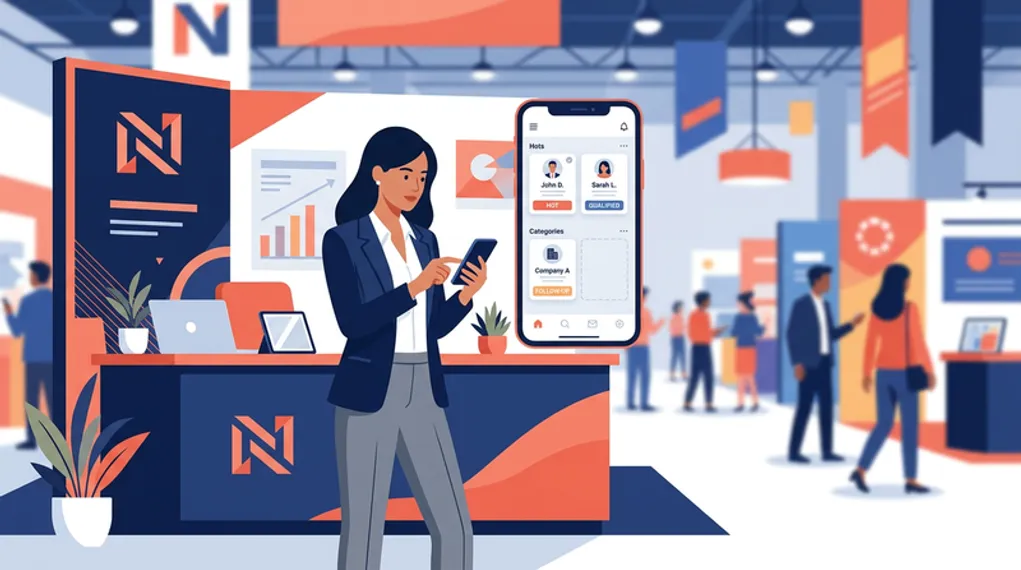
You just wrapped a 3-day trade show. Your team met 150+ people, collected a pile of business cards, and came back energized.
Then Monday hits. Emails stack up, internal meetings fill the calendar, and those cards sit untouched on someone’s desk.
Two weeks later, the leads are cold — and you’ve already forgotten what half of those conversations were about.
If that sounds familiar, you’re in good company. But it doesn’t have to be this way.
The Real Cost of Mismanaged Event Leads
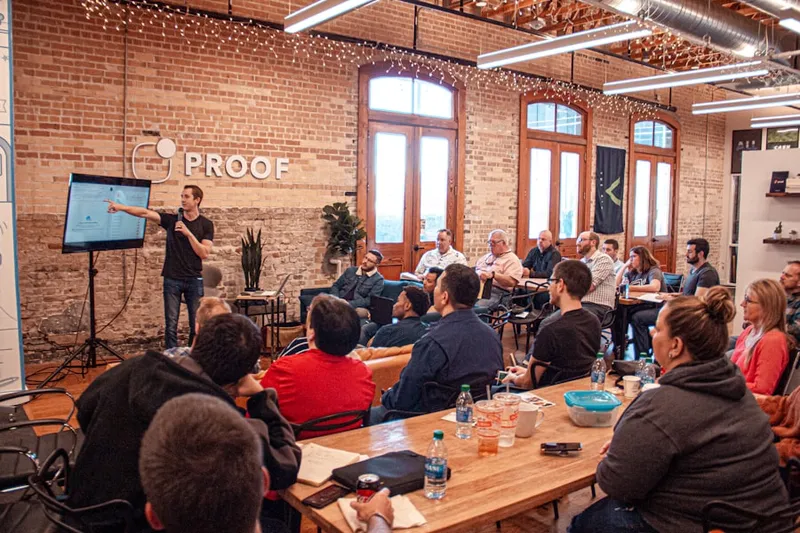
Trade shows are one of the most expensive lead sources in B2B. Exhibitors typically spend $10,000–$30,000 per booth, not counting travel, hotels, and team time. Yet 80% of trade show leads never receive any follow-up — not late follow-up, no follow-up at all.
Think about that. 81% of trade show attendees have actual buying authority. These aren’t random clicks on an ad — they’re decision-makers who walked up to your booth, shook your hand, and told you about their problems. And most companies ghost them.
The average B2B response time to a new lead is 42 hours. For trade show leads, it’s often worse — 3 to 5 business days, long after the prospect has forgotten your name.
80%
of trade show leads never receive any follow-up
CEIR
The 5 Mistakes That Kill Your Post-Show Pipeline
After watching how B2B teams handle event leads, the same patterns show up everywhere:
1. Waiting until you’re “back in the office.” Your prospects aren’t waiting. Leads contacted within 5 minutes are 21× more likely to qualify than those reached after 30 minutes. After 48 hours, your chances drop by 10×. Every day you delay is a day your competitor might not.
2. Dumping everything into a spreadsheet. Cards go into a bag, then get transcribed on the flight home. No context, no priority, no ownership. The average rep already spends 5.9 hours per week on manual CRM data entry — and that’s on a normal week. Post-event? It’s a nightmare.
3. Sending the same generic email to everyone. “Great meeting you at [Event Name]!” — this template is so common it’s become invisible. It could have been written by anyone who glanced at a badge. Personalized subject lines achieve 46% open rates, 31% higher than generic ones. If you can’t reference the actual conversation, your email won’t land.
4. No lead ownership. In 42% of organizations, marketing assumes sales will follow up, while sales assumes marketing will nurture. Nobody follows up. The lead dies in a CSV file.
5. Treating all leads the same. Here’s a humbling stat: 73% of trade show contacts exchanged info for giveaways, not because they’re buyers. Without qualification notes, your team can’t tell who’s a real prospect and who just wanted a free pen. So they either blast everyone or contact no one.
The System That Actually Works
The teams that get real ROI from trade shows share one trait: they don’t wait until after the event. They process leads during the event.
Here’s what that looks like in practice:
Step 1: Capture Contacts Instantly at the Booth
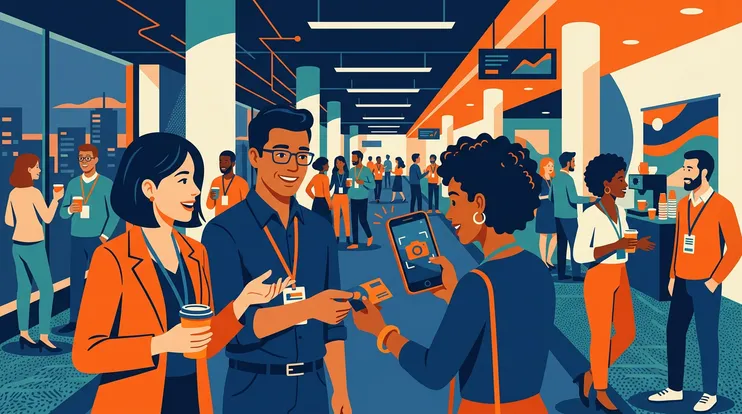
Don’t pocket the card. Scan it immediately with an AI-powered OCR tool that extracts name, company, title, phone, and email in seconds. Manual entry takes about 112 seconds per card with frequent typos. AI scanning does it in under 20 seconds.
| Manual Entry | AI Scan | |
|---|---|---|
| Speed per card | ~112 seconds | < 20 seconds |
| Error rate | High (typos, missing fields) | Near-zero |
| Context captured | None | Voice memo attached |
| CRM sync | Re-type everything | One-click push |
Step 2: Add Voice Context — Not Written Notes
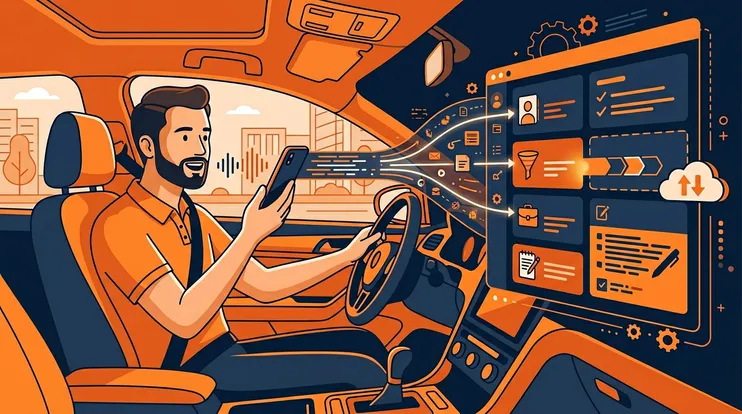
You just had a 10-minute conversation. You can’t type all the details while greeting the next visitor. Instead, dictate a 30-second voice memo with the key takeaways.
Why voice? Written notes during conversations capture only 40–60% of important points. Speaking is 3× faster than typing and preserves the nuances that make follow-ups personal.
What to capture:
- What they’re looking for
- What pain point they mentioned
- What you discussed or promised
- Any timeline or urgency
Step 3: Enrich the Contact Data
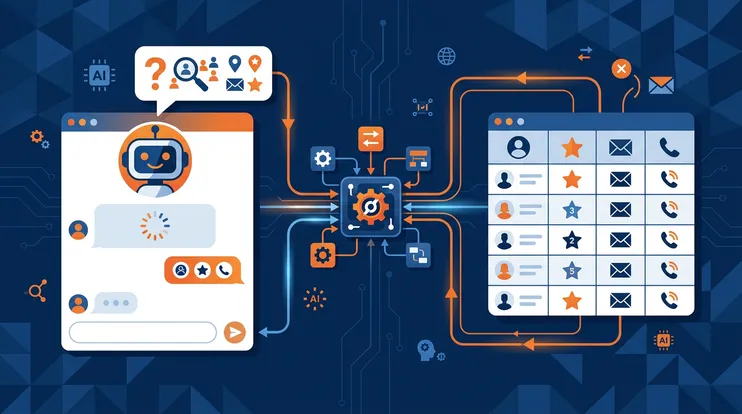
Business cards often carry outdated or generic email addresses (info@, contact@). Automatic email enrichment finds the prospect’s verified work email from their name and company — so your follow-up doesn’t bounce.
Step 4: Send a Personalized Follow-Up the Same Day
Using the scanned data and your voice context, draft a personalized follow-up email that references the actual conversation. Not a template — a message that proves you were listening.
Speed matters here more than anywhere: 78% of deals go to the first company to respond, and companies that respond within one hour are 7× more likely to qualify the lead than those waiting even an extra hour.
78%
of deals go to the vendor that responds first
Harvard Business School
Need inspiration? We put together a guide on trade show follow-up email templates with ready-to-use examples.
Step 5: Organize, Assign, and Track
Group all leads by event. Assign each contact to the rep who had the conversation. Track who followed up and who didn’t. This lets you measure follow-up rates per event, calculate real ROI, and push enriched leads directly to your CRM without any re-entry.
The Team Dimension: Who Owns What?

If you send 3–5 reps to a trade show, lead management gets messy fast. One rep collects 40 cards, another 15. Some leads get double-contacted. Others fall through the cracks entirely.
The fix is straightforward:
- One workspace per event — all reps scan into the same shared space
- Clear ownership — each lead belongs to the rep who had the conversation
- Manager visibility — a real-time view of follow-up status per rep
When every lead has a name attached to it and a visible status, nothing gets dropped.
Measuring Your Post-Show ROI
Once your system is running, track these per event:
| Metric | What It Tells You |
|---|---|
| Total leads captured | Booth traffic effectiveness |
| Follow-up rate (%) | Team discipline |
| Response rate (%) | Follow-up quality |
| Meetings booked | Pipeline generation |
| Cost per qualified meeting | True event ROI |
Trade show leads consistently outperform digital channels. 81% of attendees have buying authority, compared to 20–40% for PPC or social. The investment is worth it — if you don’t let the leads die on the vine.
Stop Losing the Leads You Already Won
The hardest part of a trade show is getting the conversation. The booth, the travel, the pitch — that’s the expensive part. The follow-up should be the easy part.
That’s exactly why we built NeverDrop: scan a business card, add voice context, get an AI-drafted follow-up — all before you leave the booth. Your team shares one workspace per event, every lead has an owner, and nothing slips through.
Because the worst outcome isn’t a bad trade show. It’s a great trade show with no follow-through.
Stop losing trade show leads. Scan, follow up, and sync — before you leave the booth.
Try NeverDrop free