Why 80% of Trade Show Leads Never Get a Follow-Up (And How to Fix It)
· 5 min read

You spent thousands on a booth, flew your team out, shook a hundred hands, and came home with a stack of business cards.
Two weeks later, most of those leads are forgotten in a drawer — or worse, in a spreadsheet that no one opens.
This isn’t a sales problem. It’s a follow-up problem.
The Numbers Are Brutal
Trade shows and conferences are one of the highest-cost, highest-potential lead sources in B2B sales. But the follow-up reality is alarming:
-
Only 20% of trade show leads ever receive a follow-up according to the Center for Exhibition Industry Research
-
Average follow-up time after an event: 3–5 business days — by which point your conversation is a distant memory
-
78% of deals go to the company that responds first per Harvard Business Review
-
Responding within 5 minutes makes you 21× more likely to qualify a lead vs. responding after 30 minutes — for a deep dive on speed to lead data, see our research breakdown
And the most painful stat of all:
Not pricing. Not product. Just… no one replied.
21×
more likely to qualify a lead by responding within 5 minutes vs. 30 minutes
Harvard Business School, 2011
Why Event Leads Die
For sales teams of 5–20 people, this is rarely laziness. It’s structural:
- Cards pile up — You collect 50 cards at a 2-day conference. Typing them into your CRM takes hours — and the CRM data quality suffers with every manual entry.
- Context evaporates — By the time you sit down to write follow-ups, you can’t remember what you discussed with who.
- Generic templates fail — A “Great meeting you at [Event]!” email doesn’t reference your actual conversation. It gets ignored.
- No ownership — Cards get split between reps, some get lost, no one tracks who followed up and who didn’t.
- Back-to-back events — You’re at the next conference before you finished following up from the last one.
In short: leads don’t disappear — they’re dropped.
Strengths
- ✓Same-day follow-up captures fresh conversation context
- ✓Personalized emails get 3× higher response rates
- ✓CRM stays clean with real-time data entry
- ✓Event ROI becomes measurable and justifiable
Limitations
- ✗Manual card entry takes 3–5 minutes per contact
- ✗Context is lost within 24 hours of the conversation
- ✗Generic templates get ignored by prospects
- ✗No visibility on who followed up and who didn't
What Actually Works: Follow Up at the Event
The best-performing sales teams don’t follow up after the event. They follow up during it.
Here’s the workflow that converts:
1. Capture the Contact Instantly
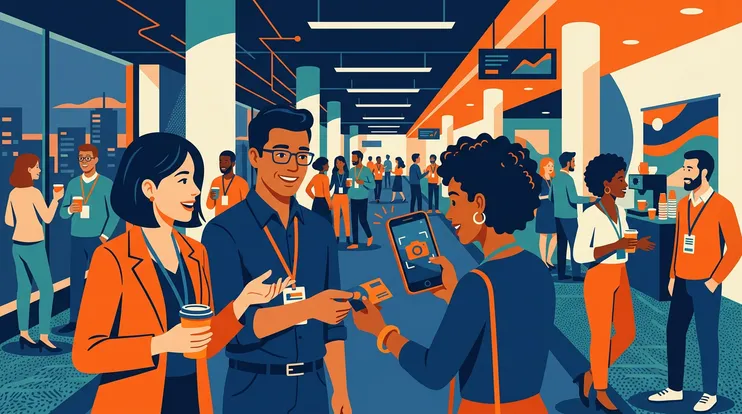
Don’t pocket the card. Scan it immediately. AI-powered OCR can extract name, company, title, phone, and email in seconds — right from your phone.
No typing. No transcription errors. No cards lost in a jacket pocket.
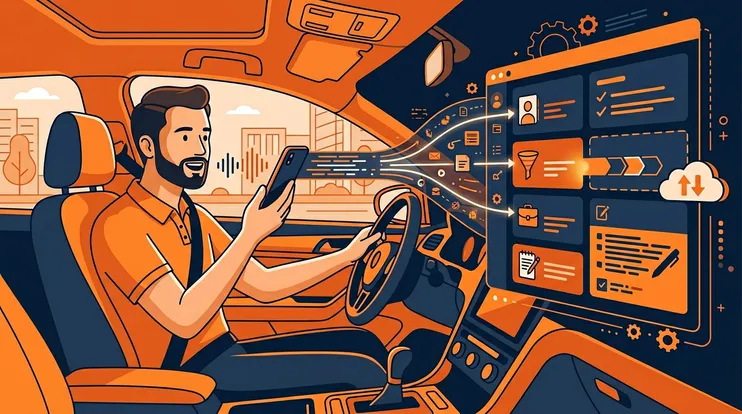
2. Record Context While It’s Fresh
Right after the handshake, dictate a 30-second voice note about what you discussed. This context is gold — it’s the difference between a generic template and a follow-up that references your actual conversation.
Best practice:
- What they’re looking for
- What you discussed or promised
- Any specific pain points or timelines
3. Let AI Draft the Follow-Up
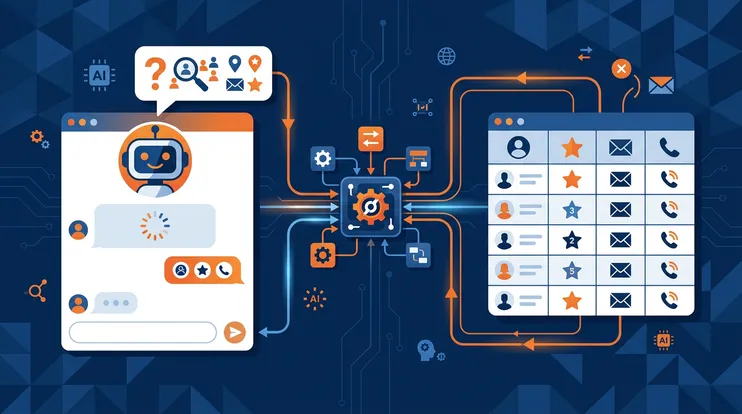
A personalized follow-up email — based on the contact’s details and your conversation context — can be drafted automatically. You review it, tweak it if needed, and send it.
Total time: under 2 minutes per contact. For the full step-by-step breakdown, see our guide on how to follow up in under two minutes.
4. Enrich the Contact
Business cards often have generic or outdated emails. Automatic email enrichment finds the contact’s verified work email from their name and company — so your follow-up lands in the right inbox.
5. Organize by Event
Group all scans by conference or trade show. This way you can:
- Track follow-up rates per event
- Measure ROI by conference
- Export leads to your CRM in bulk — or sync directly to HubSpot in one click
| Task | Traditional Process | With NeverDrop |
|---|---|---|
| Capture contact | 5 min (manual typing) | 10 sec (AI scan) |
| Add context notes | Often skipped entirely | 30 sec (voice note) |
| Write follow-up email | 15–20 min per contact | 30 sec (AI draft) |
| Find verified email | 5–10 min (manual search) | Automatic enrichment |
| Sync to CRM | 5 min per contact | One-click export |
The ROI of Speed
Let’s do the math. If you attend 4 events per year, meet 50 contacts per event:
| Metric | Without fast follow-up | With same-day follow-up |
|---|---|---|
| Contacts met | 200 | 200 |
| Follow-up rate | ~20% (40 contacts) | ~95% (190 contacts) |
| Response rate | ~10% (4 replies) | ~35% (66 replies) |
| Qualified meetings | 2 | 25+ |
The difference isn’t marginal — it’s 10× more pipeline from the same events.
Clean Pipeline = More Revenue
Bad event follow-up doesn’t feel dramatic — but it’s one of the largest hidden revenue leaks in B2B sales.
The upside of fixing it:
- Better data in your CRM
- Faster follow-up → more deals closed
- Higher event ROI → easier budget justification
- Happier sales teams → less admin, more selling
This is exactly why NeverDrop exists: scan a business card, add voice context, get an AI-drafted follow-up — all before you leave the booth. Every lead gets the attention it deserves, and no opportunity is lost to a forgotten card or a generic template. For a comprehensive framework covering the full capture-to-CRM pipeline, see our complete guide to event lead capture.
Because in sales, you already worked hard to get the handshake. Dropping the follow-up should never be an option.
Stop losing leads after every event. Scan, record, follow up — all before you leave the booth.
Try NeverDrop FreeKey Sources
- Center for Exhibition Industry Research (CEIR)
- Harvard Business Review
- HubSpot
- InsideSales
- Sopro